The short answer
Ambitious goals work when two conditions hold: recent success and slack, meaning reserves, staff hours, and systems that can absorb a miss. Most nonprofits have neither right now, and the ones with the least slack are the ones most tempted to reach. The fix is not a smaller vision. It is sequencing. Spend year one of the plan building the slack the rest of the plan needs: one subtraction, one reserve target, one hire or system. Count the hours every initiative will cost and name who pays them. Then stretch. Organizations that received large unrestricted gifts did exactly this with the money, and the research on what happened next is the best argument for slack I know.
In Post 1, I wrote that the staff of eleven reads the twenty-three strategic initiatives and does the math. This is the post about that math, which is to say about nonprofit capacity planning, done before the plan is approved instead of after it fails.
Start with where the sector is. The Nonprofit Finance Fund surveyed 2,206 nonprofits for its 2025 State of the Sector report. Thirty-six percent ended 2024 with an operating deficit, the highest share in the survey in ten years. Fifty-two percent had three months of cash or less. Eighty-five percent expected demand to rise. The Center for Effective Philanthropy's State of Nonprofits 2026 found 46 percent of CEOs now call their own burnout "very much a concern," up from under 30 percent a year earlier, and the share of organizations reporting a deficit has nearly doubled since 2022, from 22 to 39 percent.

That is the baseline. The year after a deficit is precisely when a board reaches for the boldest plan it can approve, because morale needs a lift and a bold plan photographs well. The research says that is the configuration that hurts you.
What the research actually says
The obvious advice is wrong. Evidence doesn't support telling a nonprofit to aim lower; decades of goal-setting studies show that specific, difficult goals outperform easy ones. I said that in Post 1 and I am not walking it back.
The useful finding is narrower. Sim Sitkin and colleagues at Duke studied stretch goals, the ones with no known path to achieving them, and found they pay off under two conditions: recent success, which lets people read an audacious target as an opportunity rather than a threat, and slack resources, which let the organization survive a miss. Their paradox: organizations with both conditions rarely stretch, because success makes them cautious, while organizations with neither stretch most, because they are desperate. Sitkin's advice for the second group is not to abandon ambition. It is to pursue small wins and small experiments with limited downside until the conditions exist.
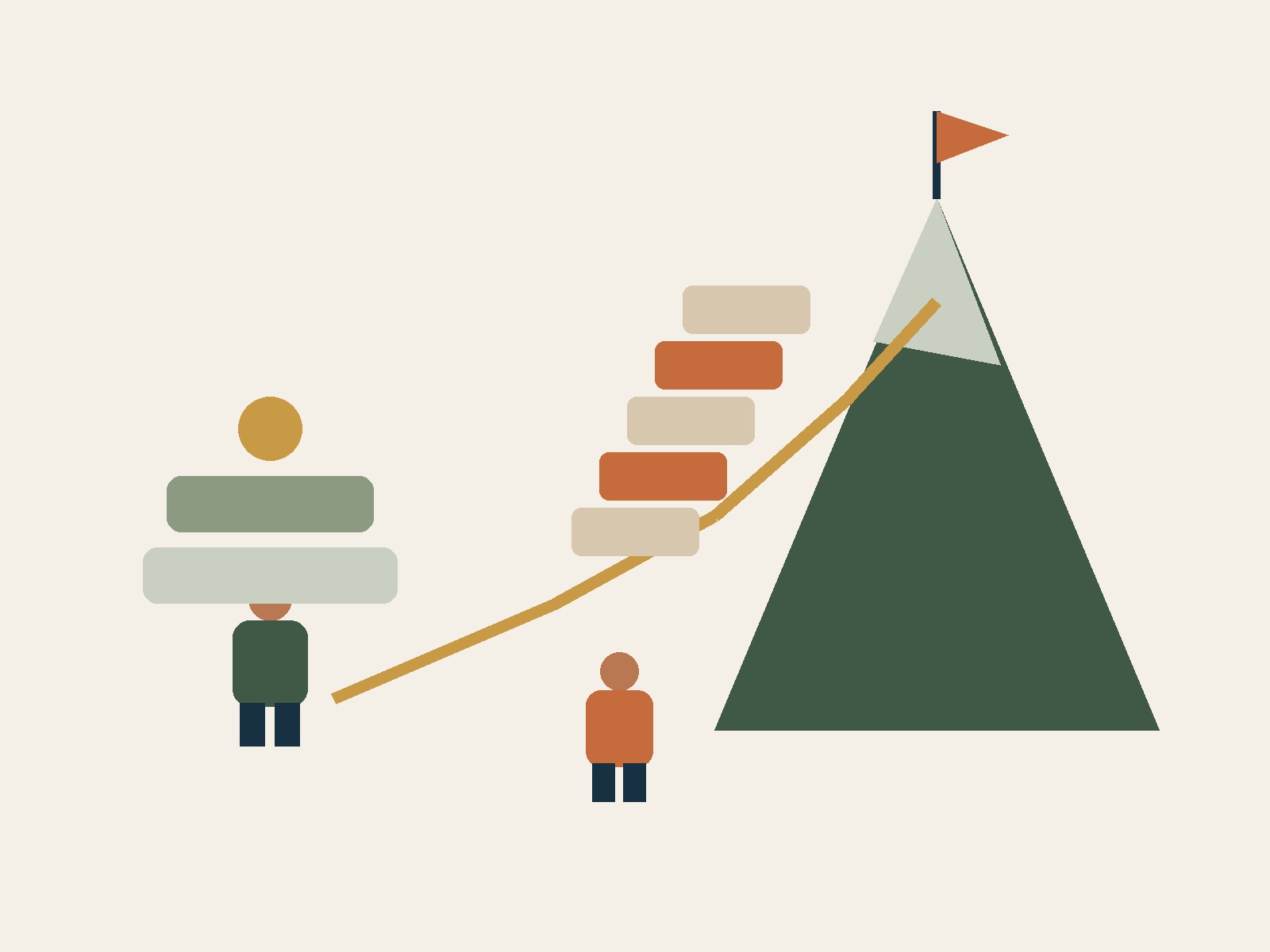
Two other findings sharpen that. Nitin Nohria and Ranjay Gulati showed in 1996 that slack and innovation form an inverted U: too little and nobody experiments, because every hour is spoken for; too much and discipline erodes. Nonprofits live on the left side of that curve. And the planning fallacy, named by Daniel Kahneman and Amos Tversky in 1979 and confirmed by Roger Buehler's team in 1994, says people underestimate how long their own projects will take even when they know their past estimates were wrong. The fix, from Bent Flyvbjerg's work on large projects, is the outside view: stop asking how long this will take and ask how long similar projects took last time.
Put those together, and you get the rule for this post. Before you adopt a plan, know your slack, and estimate the cost of every initiative from your own history, not your hopes.
Who has slack
Slack is not distributed by merit. Echoing Green and Bridgespan's 2020 study of their own applicant pools found that among the most qualified organizations, those led by Black leaders held unrestricted net assets 76 percent smaller than those led by white leaders. The stretch-goal research has a racial dimension nobody built into it. The organizations told to be bold are, disproportionately, the ones with the least room to be.
The starvation cycle feeds this. Mirae Kim, Étienne Charbonneau, and Jessica Sowa estimated in 2025 that nonprofit managers shave roughly ten percentage points off reported overhead ratios to stay competitive, and that managers distrust the low ratios they see from peers. Everyone is hiding the cost of running the organization, so nobody can plan around it. Yuan Tian, Chiako Hung, and Peter Frumkin found in 2020 that donors give more to high-overhead organizations that explain the overhead plainly. The way out starts with saying the number.

Then the best natural experiment the sector has had. CEP followed 813 organizations that received MacKenzie Scott's large unrestricted gifts, median $5 million, median 77 percent of the prior year's budget, and compared their financials to similar nonprofits that did not. Two years on, recipients held twice as many months of cash reserves as comparable organizations. Two-thirds added staff, and more than 70 percent of those kept the positions. Over a third of leaders said the gift reduced their burnout, and nearly 40 percent said they intend to stay in their jobs longer because of it. Nearly 90 percent reported no negative consequences. Only 7 percent lost a funder over it. The fear that slack makes nonprofits lazy or dependent did not show up. What showed up is what the stretch-goal research predicts: given room, organizations grew expenses at twice the rate of their peers, and revenue rose to cover it, with reserves still twice as deep two years on.
You may not be getting a Mackenzie Scott gift, but the study tells you what slack does, and so what to build.
Who pays when there is none
A plan that assumes everyone will work harder is not a plan with no cost. It is a plan whose cost lands on specific people.
The Building Movement Project's 2024 report on declining interest in nonprofit leadership found that among executive directors considering leaving, 41 percent of leaders of color cited burnout, against 31 percent of white leaders. Incoming leaders of color reported board support at 49 percent, compared with 70 percent for white leaders. And interest in ever becoming an executive director has dropped across every group since 2019, with work-life balance the most cited reason. Post 2 covered the glass cliff. This is the slope up to it. The additive plan is how organizations manufacture the conditions that push their best people out.
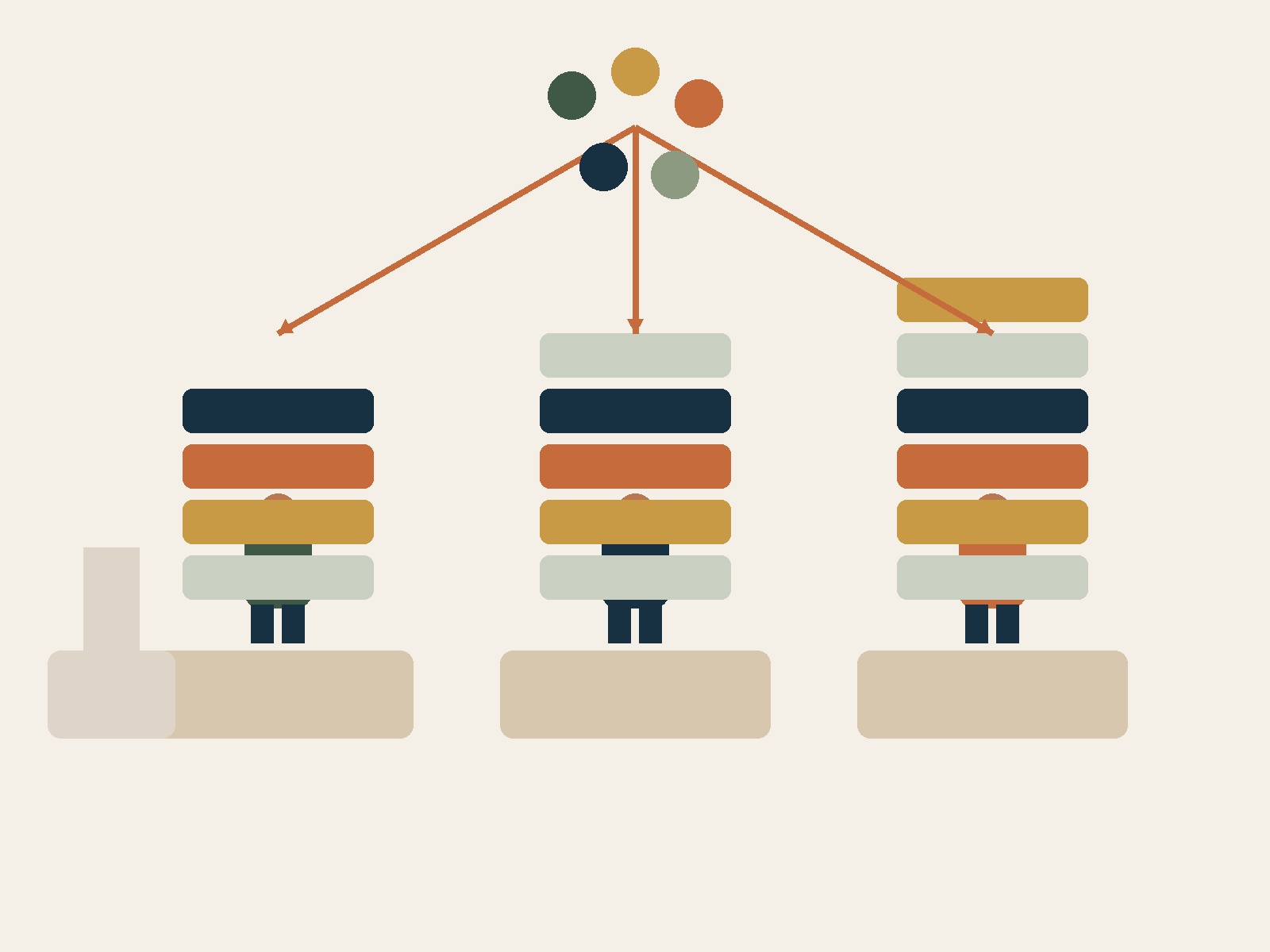
The National Council of Nonprofits' most recent workforce survey put it bluntly: three in four organizations had open positions, and half named burnout as a cause. Every initiative you add without subtracting lands on a desk already covering an empty one.
I worked with a client whose program list read like a very good idea file. Some programs were early proofs of concept. Some had hardened into institutions. A few existed because a funding opportunity had appeared, and a few because a constituent had asked. What none of them had was a shared reason for being, and the staff could feel it. Key people were maxed out and confused about why they were doing what they were doing, and more than once they were pulled off a project that then died, either because the money or the founder's attention moved.
What changed things was not a bolder plan. It was making the organization build the case for every program it ran: who it was for, what it cost in hours, what it would take to keep. Once that existed, they could weigh a new idea against a benchmark and say no. The no turned out to be the capacity they had been missing. In Post 2's terms, that organization was a reactor, and the cure was this post's: build the slack before you build the next thing.
The bandwidth ledger
This takes one afternoon.
List every initiative in the draft plan. For each one, name the owner, who per Post 1 cannot be the executive director for all of them, and estimate the owner's hours per month to move it. Do not guess from the initiative. Pull the estimate from the last time your organization did something like it, which is the outside view in practice. If nobody remembers, or you have never done anything like it, borrow the memory: call two peer organizations that have and ask what it took them. If even that fails, take your best guess and multiply it by one and a half, because that is roughly how far off the planning fallacy research says a first estimate runs. Then add up the hours by person.
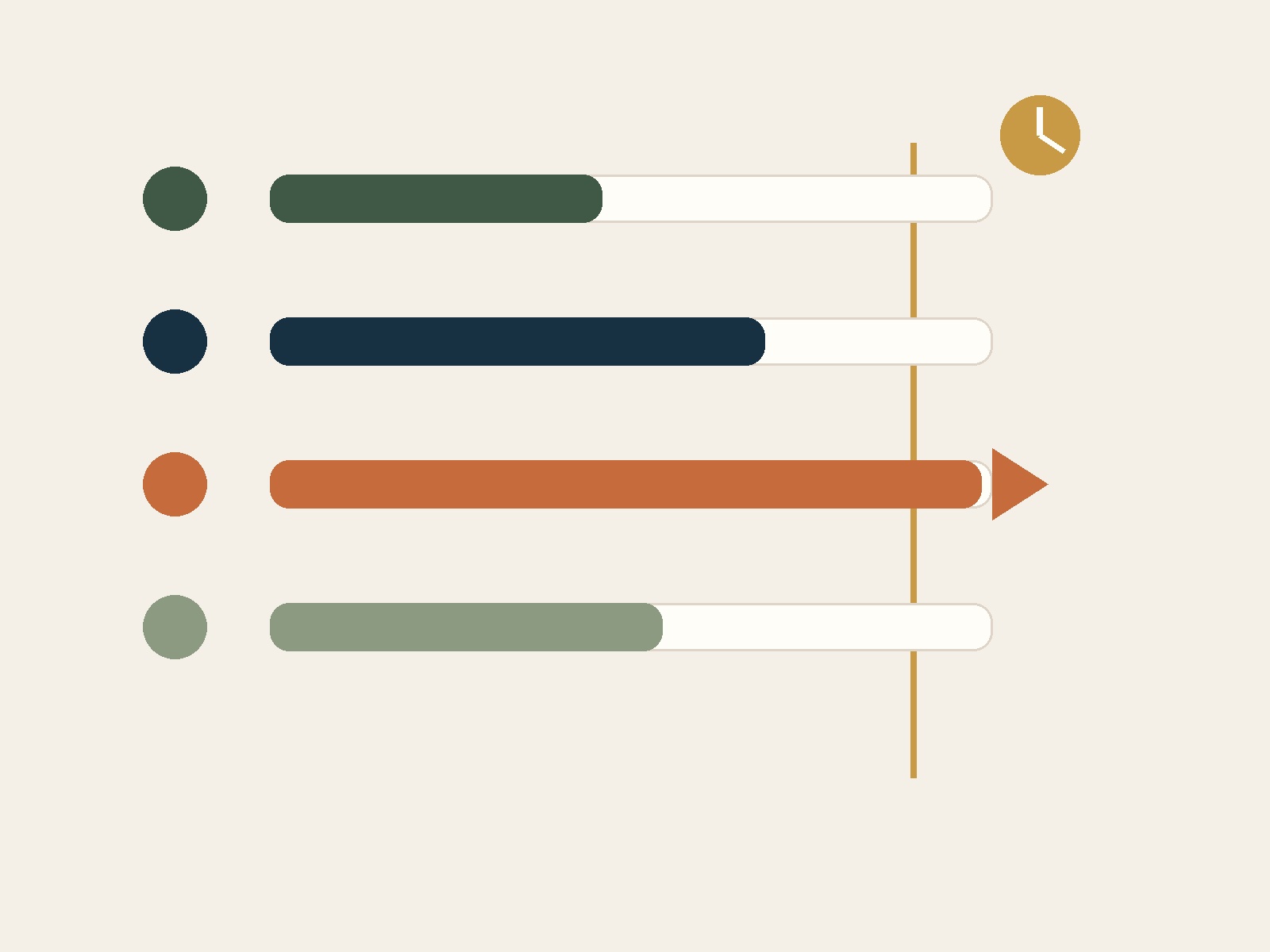
Now the number nobody writes down. A full-time person in a nonprofit your size has, in my experience, about four hours a week of discretionary capacity after the work that already exists, on a good month. Call it fifteen hours a month. If the ledger puts thirty hours a month on your program director, the plan has already decided she will fail, before anyone noticed.
Three ways out of a ledger that does not balance, in the order I would try them. Subtract: Post 1's question, what are you giving up, is the cheapest capacity you will ever find. Sequence: move initiatives to year two or three, as WTEF did with its phased growth and a written rule to pause if the deficit says so. Fund the slack: a reserve target, a hire, or a system, and put it in the budget the board approves, because a plan that never touches the budget cannot move money.
Then run the stretch. Year one builds the conditions. Year two reaches. That is not timidity. It is the research.
So, friend or foe
Five posts ago I said the plan is neither. It is inert. What decides which one you get is a set of choices made before anyone writes.
Who is it for, and have you said so out loud? Who helped write it, and did they know going in what their input could change? What are you giving up, and does the budget show it? How will you change it, and who is allowed to? And this one: can the people in the building actually carry it, and have you counted?
Fail those tests, and the plan drifts. Nobody declares it dead. It just stops coming up in meetings, and eighteen months later the organization is more cynical and more tired than the day it started, and the next planning process is harder because of it.

Pass them, and you get what WTEF has. A plan its CEO can defend line by line, because the people who had to carry it were in the room when it was written and were told what their input could change. A page that says what the organization will not do, so the staff knows what the growth target costs. A rule, in writing, to pause if the deficit says so. Leadership looks at it every two weeks. That plan will bend when conditions change, because bending is built in, and that is a key difference between a plan that drifts and a plan that holds.
Same binder. Same cover stock. Completely different object. Five questions decide which one you are holding, and you answer every one before anybody writes a word.
What I would do first
Before the first planning session, build ninety days of slack. Pick one thing to stop. Set one reserve number and put it in next year's budget. Name one system or one hire the plan depends on and fund it first. Marque's Organizational Health Diagnostic looks at eight domains, and three of them - leadership and staffing, financial health, and systems and documentation- are where slack lives or does not. It is free, and it takes a few minutes. If you would rather talk it through, let's talk. Either way, do the ledger before you do the retreat. The template is a Google Sheet, free, one click to copy.
Sources
Where a source is linked, you can read it for free. Where it isn't, it sits behind a journal paywall, and I'm not going to send you somewhere that charges you.
Stretch goals and slack
Sitkin, S. B., See, K. E., Miller, C. C., Lawless, M. W., & Carton, A. M. (2011). The Paradox of Stretch Goals: Organizations in Pursuit of the Seemingly Impossible. Academy of Management Review, 36(3), 544 to 566.
Duke Fuqua Insights. (2017). When Firms Should Stretch for Goals. https://www.fuqua.duke.edu/duke-fuqua-insights/sitkin-stretch-goals
Nohria, N., & Gulati, R. (1996). Is Slack Good or Bad for Innovation? Academy of Management Journal, 39(5), 1245 to 1264.
Kahneman, D., & Tversky, A. (1979). Intuitive Prediction: Biases and Corrective Procedures. TIMS Studies in Management Science, 12, 313 to 327.
Buehler, R., Griffin, D., & Ross, M. (1994). Exploring the "Planning Fallacy." Journal of Personality and Social Psychology, 67(3), 366 to 381.
Flyvbjerg, B. (2006). From Nobel Prize to Project Management: Getting Risks Right. Project Management Journal, 37(3), 5 to 15. Free: https://arxiv.org/abs/1302.3642
The state of the sector
Nonprofit Finance Fund. (2025). 2025 State of the Nonprofit Sector Survey. https://nff.org/state-of-the-nonprofit-sector-survey/2025-state-of-the-survey-nonprofit-sector-survey/
Center for Effective Philanthropy. (2026). State of Nonprofits 2026: What Funders Need to Know. https://cep.org/report-backpacks/state-of-nonprofits-2026/
National Council of Nonprofits. (2023). 2023 Nonprofit Workforce Survey Results. https://www.councilofnonprofits.org/nonprofit-workforce-shortage-crisis
Who has slack, and who pays
Dorsey, C., Bradach, J., & Kim, P. (2020). Racial Equity and Philanthropy: Disparities in Funding for Leaders of Color Leave Impact on the Table. Echoing Green and The Bridgespan Group. https://www.bridgespan.org/insights/disparities-nonprofit-funding-for-leaders-of-color
Center for Effective Philanthropy. (2025). Breaking the Mold: The Transformative Effect of MacKenzie Scott's Big Gifts. https://cep.org/wp-content/uploads/2025/02/CEP_Breaking_the_Mold_FNL.pdf
Building Movement Project. (2024). The Push and Pull: Declining Interest in Nonprofit Leadership. https://buildingmovement.org/wp-content/uploads/2024/01/BMP_The-Push-and-Pull-Report_Final.pdf
Kim, M., Charbonneau, É., & Sowa, J. (2025). The Nonprofit Starvation Cycle: The Extent of Overhead Ratios' Manipulation, Distrust, and Ramifications. Nonprofit and Voluntary Sector Quarterly, 54(1).
Tian, Y., Hung, C., & Frumkin, P. (2020). Breaking the Nonprofit Starvation Cycle? An Experimental Test. Journal of Behavioral Public Administration, 3(1). Free: https://journal-bpa.org/index.php/jbpa/article/view/93
Two caveats. The Scott study is largely self-reported and covers recipients that are bigger than most organizations reading this; the Form 990 comparisons are the part to trust. And the four-hours-a-week figure in the ledger is my working estimate from client work, not a research finding. Replace it with your own.
Last updated November 6, 2026.